 English,
 Spanish,
 Polish,


Free Consultation
630-932-9100

-

- Home
- Our Firm
- Practice Areas
- Divorce
- Alimony and Maintenance
- Child Support
- College Expenses
- Special Needs Children and Divorce
- Parental Responsibility / Custody
- Sole Custody vs. Joint Custody
- Parenting Plans and Visitation
- Child Relocation
- Property and Asset Division
- Retirement, 401k Accounts and Pensions
- Debt Division
- Post Decree Modifications
- Post Decree Enforcement and Contempt Hearings
- Dissolution of Arranged Marriages
- Tax Consequences and Divorce
- Uncontested Divorce
- Divorce Involving Mental Health Issues or Addictions
- Divorce and the Stay-at-Home Parent
- Divorce FAQs
- Family Law
- Personal Injury
- Motor Vehicle Accidents
- Auto Accidents
- Truck Accidents
- Amazon Delivery Driver Accidents
- Motorcycle Accidents
- Rideshare Accidents
- Pedestrian Accidents
- E-Bike/E-Scooter Accidents
- Boat Accidents
- Aviation Accidents
- Premises Liability
- Medical Malpractice
- Nursing Home Abuse
- Wrongful Death
- Construction Site Accidents
- Other Serious Injuries
- Personal Injury FAQs
- Workers' Compensation
- Construction Accidents and Injuries
- Warehouse and Factory Worker Injuries
- Healthcare Worker Injuries
- Office Worker Injuries
- Shipping and Trucker Worker Injuries
- Types of Workers' Compensation Injuries
- Back and Neck injuries
- Repetitive Stress Injuries
- Arm and Shoulder Injuries
- Knee Injuries
- Occupational Diseases
- Specific Accident Cases
- Who We Represent
- Workers' Comp Death Benefits
- Filing a Workers' Comp Claim
- How to Qualify for Benefits Under Workers' Comp
- Vocational Rehabilitation Rights
- Workers' Compensation FAQs
- Criminal Defense
- Immigration
- Bankruptcy
- Estate Planning
- Real Estate
- Divorce
- Success Stories
- Testimonials
- Media
- Blog
- Contact Us
Recent Blog Posts
Motorcyclists and Lane Splitting
 Spring weather across the nation is luring out motorcyclists onto highways and roads. While some drivers may view motorcycles as a risk or menace on the road, most motorcyclists are law abiding enthusiasts who have chosen a motorcycle over a car for various reasons. Yet whatever the reason, drivers are still wise in being cautious of motorcyclists.
Cars and motorcycles are involved in accidents daily—accidents which can cause significant personal injuries to both motorcyclists and others, in addition to property damage. Moreover, motorcyclists who “lane split,” or travel between actual lanes, can be a risk to themselves and to other cars and drivers.
Data from the California Enhanced Motorcycle Collision Data Project reports that 997 collision-involved motorcyclists, out of 5,969, were lane-splitting at the time of their collision. And while lane splitting may be considered actually safer for a rider, there are those who flout the law and create danger for others.
What Happens at Removal Proceedings?
 The concept of immigration proceedings can be very confusing for some, with misinformation constantly propagated about what occurs and what a court can do during such hearings. If you or a loved one has been placed into removal proceedings, the situation can be stressful, but all is not necessarily lost. Being aware of what exactly occurs at such proceedings can help ease fears.
The Master Calendar Hearing
The first step in the process is the master calendar hearing, and while it is not required that you bring an attorney, it is recommended. Regardless of whether or not you have one, you absolutely must attend this hearing—if you do not, you will almost certainly be ordered removed in absentia. In other words, the judge will assume that since you did not appear, you have no defense to the charge of removability.
Appearing at the master calendar hearing allows you to contest the allegations of removability, assuming you are able. If you cannot, you may still be able to negotiate what is referred to as voluntary departure. Voluntary departure is just that—voluntarily leaving the United States, rather than being deported. If someone is granted voluntary departure, it means that there will be no bar against his or her return, as there would be otherwise—he or she simply must obtain the appropriate visa abroad.
The Birdnesting Divorce Trend: Is it Right for Your Family?
 There is a growing custody trend in divorce – one that places children at the very forefront in a new and unconventional way. Known as “birdnesting,” it is receiving attention from celebrities, television shows, and everyday divorcees alike. The big appeal is that children are not uprooted or split between two homes during and after a divorce, and many swear it has helped their children with adjustment during and after the divorce. But is this custody arrangement right for your family? The answer may rest in why you are getting a divorce in the first place.
How Birdnesting Works
In a “conventional” divorce, parents share what is known as parenting time and the child may have two separate homes – one with each parent. Birdnesting is exactly the opposite – parents are the ones who alternate living space, and in some circumstances, they may even be under the same roof for a decent amount of time. And, typically, it is the same house they owned prior to the divorce.
How a Simple Fall or Minor Accident Could Turn Fatal
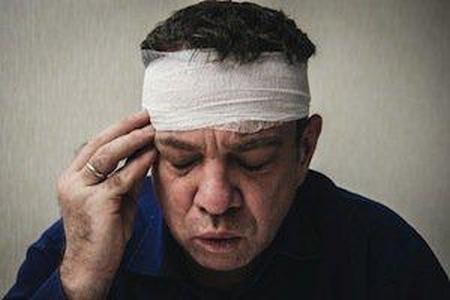 When most people think of head injuries, they think of concussions: blows to the head experienced during major falls, automobile accidents, or while playing sports that can have lasting effects. There is, however, a lesser known but quieter, insidious type of head injury in which few people are aware. Experienced even during minor accidents or simple slips and falls, these injuries are slow-growing but can quickly and easily become fatal if not detected. These injuries are known as subdural hematomas.
What is a Subdural Hematoma?
Like concussions, subdural hematomas are injuries to the head. However, unlike concussions, subdural hematomas do not need a major blow to occur. They can occur because of a simple fall, or even just starting to fall and then catching yourself. Subdural hematomas can also occur even during a minor automobile accident, where the head is suddenly jolted or bumped so slightly that the injured person does not even remember or fully register the hit. Those who are aged 60 or older are most susceptible because of how the brain changes with age.
Permanent Residence and the Violence Against Women Act
 It is an unfortunate reality that many people in the United States are the victims of violence at the hands of their loved ones. While it is more common for women to experience such treatment, it affects men as well. Sometimes, it can become an issue of survival. If your abuser is a United States citizen or permanent resident, there may be a way out for you. The Violence Against Women Act (VAWA) permits battered spouses to apply for permanent residence to get away from their abusers (despite the title, both genders are encouraged to apply).
Can Any Immigrant Apply?
Upon its passage in 1994, VAWA only applied to women, though its benefits were later extended to those who identify as male or non-binary. It recognizes the necessity to allow non-citizens who meet the requirements and are the victims of domestic violence a chance to start a new life without their abuser’s presence. However, the immigrant must be either the spouse or child of their U.S. citizen or lawful permanent resident abuser, or the parent of their U.S. citizen abuser, to qualify under VAWA. You may also file as an abused spouse if your child has been abused by your U.S. citizen or permanent resident spouse.
Understanding Grandparents’ Rights in Illinois
 In the state of Washington, grandparents are banding together to obtain legal rights to their grandchildren. But what does this mean, exactly? And how – if at all – does the law protect the rights of grandparents in Illinois? If you are a grandparent and are being denied visitation to your grandchild, the following will help you understand if and how Illinois’ grandparents’ rights statute applies to you.
How the Law Defines Grandparents’ Rights
Grandparents’ rights are not like parenting rights, nor do they overrule them. Instead, the Illinois statute 750 ILCS 5-602.9 simply acknowledges that you have the right to ask the court for legal permission to see your grandchildren. Depending on the situation, this request may or may not be granted, and it may or may not be considered “valid” by the courts. In fact, there are only a handful of situations in which you may legally pursue grandparents’ rights.
Head-On Collisions Still Costing Lives
 Car accidents occur daily, and some of the most deadly accidents are head-on collisions. These types of collisions can be caused in a variety of ways. Speed is usually the top offender, in addition to accidents caused by drivers who are drunk, drivers who are under the influence of drugs, or drivers who are distracted. The resulting impact on the loved ones left behind can be devastating.
Additionally, if someone is lucky enough to even survive a head-on collision, the ongoing care and convalescence involved can be lengthy and costly. Almost 100 fatal injuries occurred in Illinois in 2012 due to head on collisions.
Head-on Collisions
Head-on collisions account for roughly 10 percent of driving fatalities and usually occur because of another driver’s unintentional maneuver on the road. Unintentional maneuvers can occur when a driver is being reckless, speeding, fatigued, distracted, or is driving too fast for the road pattern or weather conditions. Even drunk drivers or those under the influence of drugs can contribute to this deadly type of motor vehicle accident. This negligence and recklessness creates a huge risk and does not bode well for law abiding, safe drivers and their innocent passengers when sharing the road.
Changes in ICE Policy Regarding Transgender Refugees
 Very often, the most vulnerable people seek asylum in the United States, fleeing oppressive and dangerous conditions in their home countries. Yet what many do not realize is that sometimes, the waiting for a decision can be arguably just as difficult and dangerous. This is especially true for transgender and non-gender-conforming people, who make up approximately one of every 500 immigrants, and an even higher proportion of asylum seekers. However, Immigration and Customs Enforcement (ICE) has begun to make changes to their policies regarding these potential asylees, which can only improve quality of life in general.
Is Gender Identity Covered by Asylum Law?
U.S. asylum law has its roots in the 1951 Geneva Convention and its 1967 protocol on refugees. The definition of a refugee propagated in the Convention is the one contained almost word for word in the U.S. Immigration & Nationality Act, and it permits application for asylum if someone is unable to obtain protection from, or return to, his or her country of nationality. If these criteria are met, there are five grounds on which someone may apply under U.S. law for asylum. Those grounds are race, religion, nationality, political opinion, or membership in a particular social group.
Understanding the Potential Financial Ramifications of Divorcing Later in Life
 Divorce in the later years of life – often referred to as "gray divorce" – is becoming more common, especially now that people are living longer, working longer, and physically active longer. In fact, one in four Americans over the age of 50 are going through a divorce, which is double the rate from 1990. Unfortunately, this also comes with some drawbacks, particularly in the financial area. Know what your risks are and how you may be able to prepare effectively before filing.
Marital Assets in Gray Divorce
Just like in all divorces, marital assets are divided among those divorcing later in life. For example, pension money, such as IRAs and 401Ks earned during a divorce, are usually split. This can ultimately delay retirement, especially if alimony is an issue. In contrast, if the divorcing couple has already retired, this can create a massive shift, possibly to the point of completely altering the lifestyle of one or both parties.
Truck Driver Fatigue Means Risky Roads
 Truck drivers perform a very important role in our daily commerce. Without them transporting goods between destinations, our everyday lives and the flow of goods and services would be impacted. However, long haul journeys are often involved and the incidents of truck accidents do not go unnoticed.
Reports from the U.S. Department of Transportation state that close to 4,000 people are killed in large truck crashes each year. Moreover, driver fatigue is stated as a leading factor.
Motivated to drive longer in order to be paid more, tired drivers put others at risk on the roads. In 2013, there were 10,397 crashes involving tractor-trailers in Illinois alone.
Under-represented Statistics
Train and bus accidents grab the news headlines when there are multiple casualties due to a tired driver or conductor falling asleep behind the wheel or at the controls. Trucks are no exception. Unlike testing for alcohol and drugs, a definitive test for fatigue does not exist. This can lead to the real numbers of fatigued drivers causing accidents being under-reported and under-estimated.









Offices in 3 Convenient DuPage County Locations
Lombard
900 E. Roosevelt Road
Lombard, IL 60148
Phone: 630-932-9100
Fax: 630-932-9868
MAP & DIRECTIONS
Bloomingdale
134 N. Bloomingdale Road
Bloomingdale, IL 60108
Phone: 630-529-2400
Fax: 630-529-7630
MAP & DIRECTIONS
Naperville
Phone: 630-420-1000
By Appointment Only

 Make a Payment


